
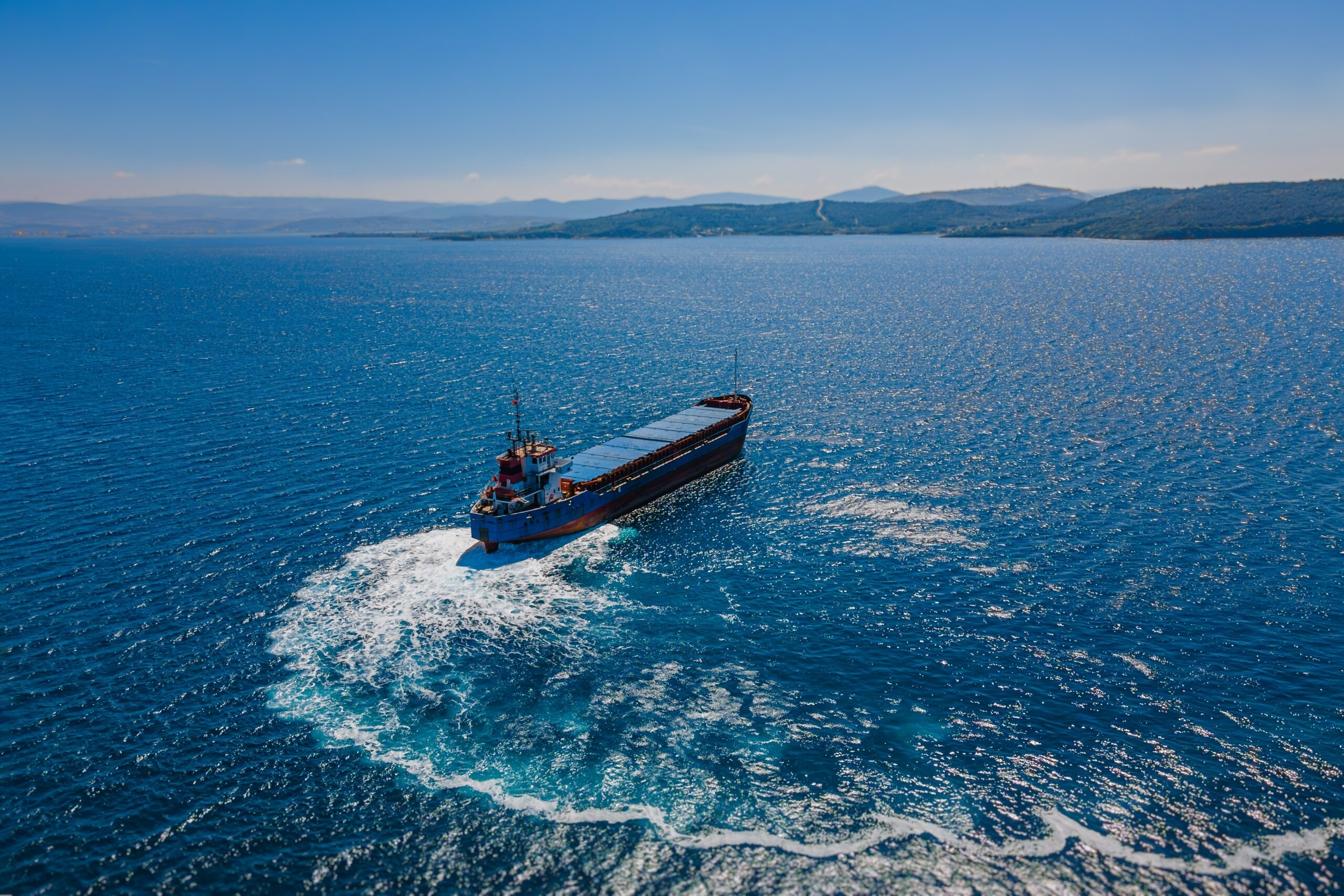
GLO Marine recently completed a decarbonisation roadmap for an 82,000 DWT bulk carrier owned by a Croatia-based shipowner, addressing compliance with IMO Carbon Intensity Indicator (CII) requirements.
At the time of the assessment, the vessel—rated C in 2024—was projected to fall to D from 2025 without corrective measures. Maintaining compliance required an estimated ~20% improvement in fuel efficiency, together with a defined SEEMP Part III corrective action plan.
Methodology and assessment
The study combined baseline fuel consumption and AER analysis with long-term CII modelling, supported by a detailed review of the vessel’s operational profile and constraints. This enabled clear identification of the efficiency gap and the boundaries for retrofit implementation.
A targeted technology screening was carried out across operational optimisation, hydrodynamics, propulsion efficiency, and wind-assisted solutions, with each option assessed for feasibility, cost, and compliance impact.
Scenario evaluation
Several retrofit scenarios were developed to reflect different implementation strategies.
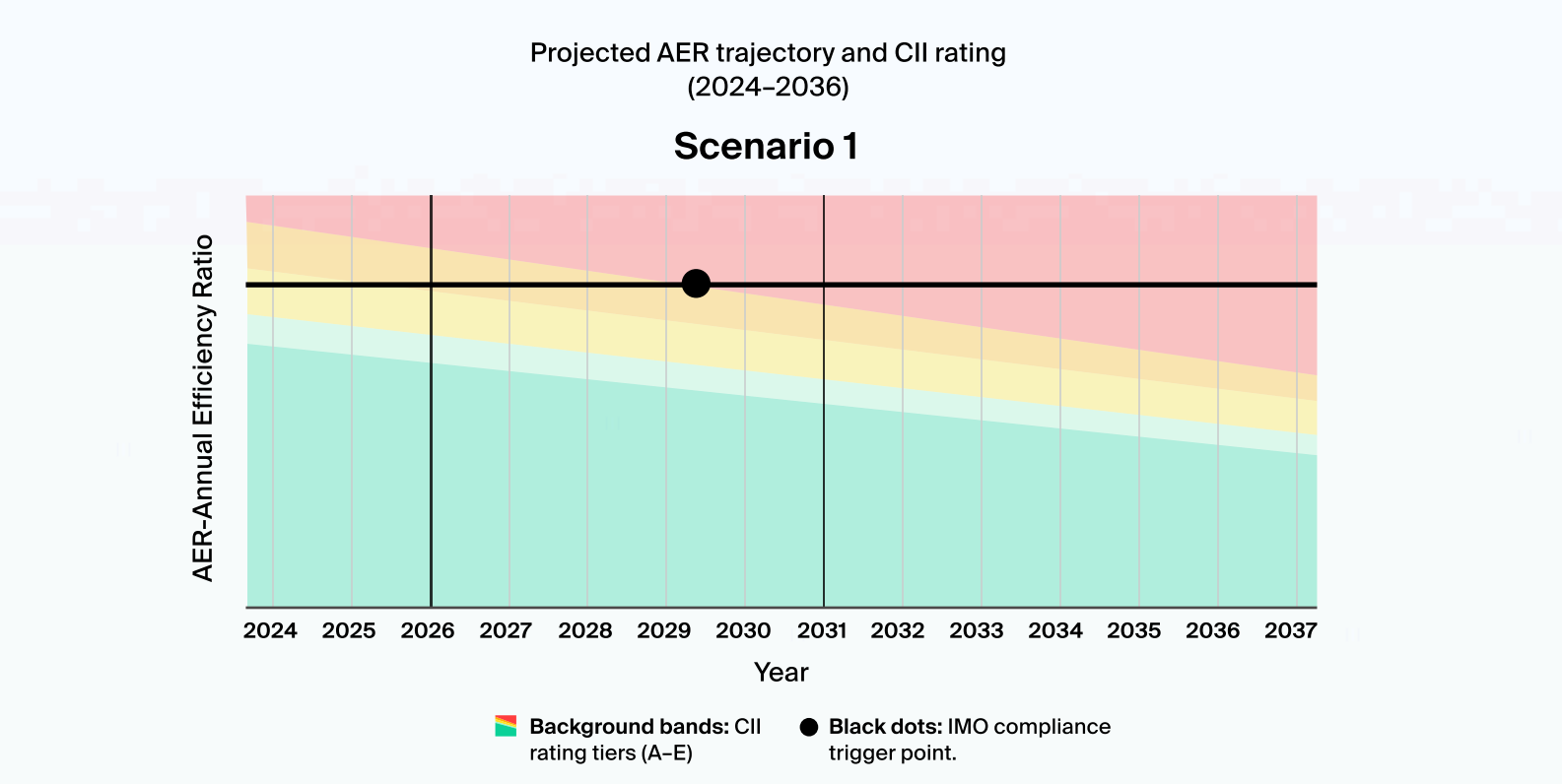
The baseline scenario confirmed a progressive decline in efficiency, with compliance risks emerging from 2025 onwards in the absence of intervention.
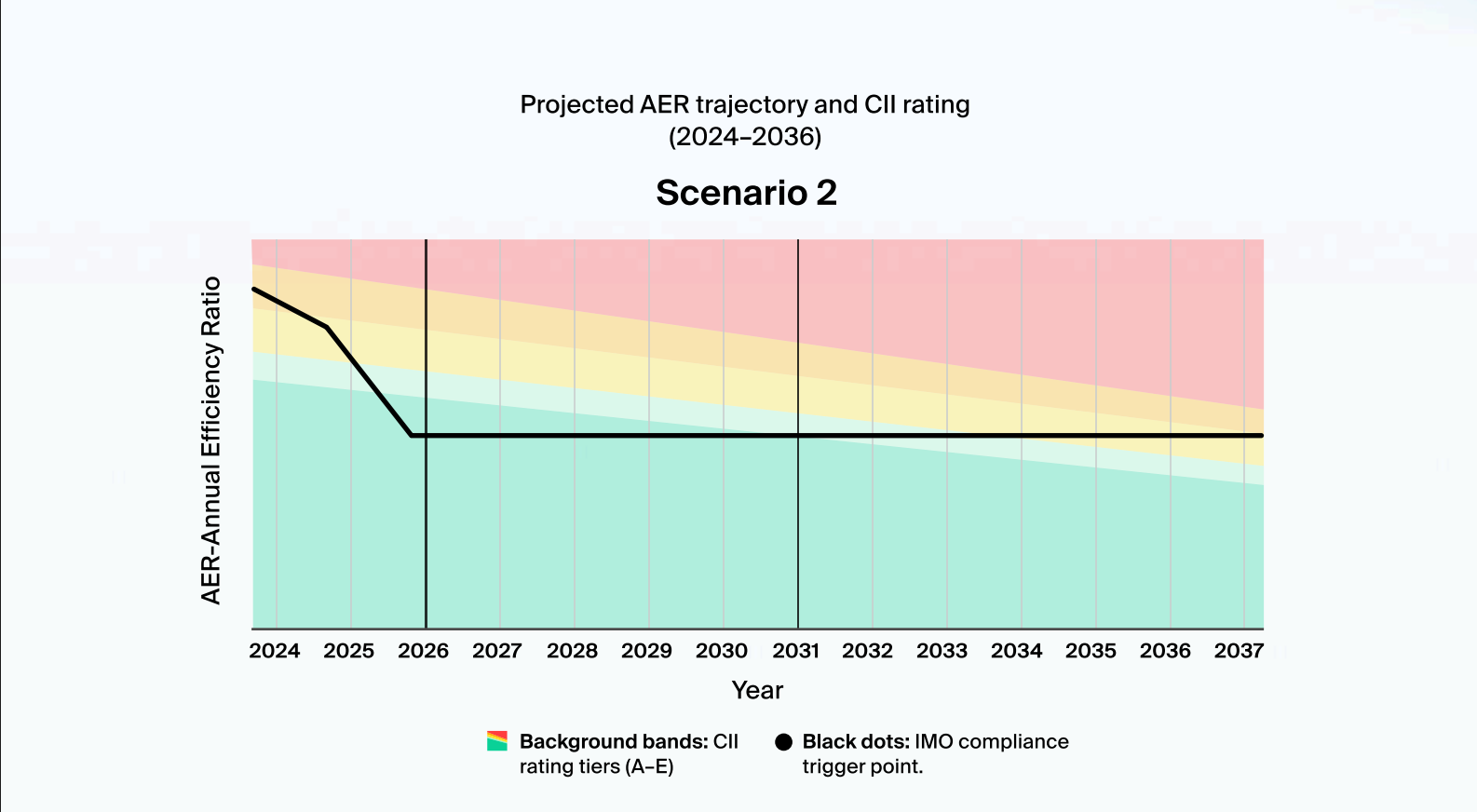
A front-loaded scenario evaluated early investment in efficiency technologies, combining operational measures with solutions such as wind-assisted propulsion and continuous antifouling. This approach provides strong long-term gains but requires higher upfront CAPEX.
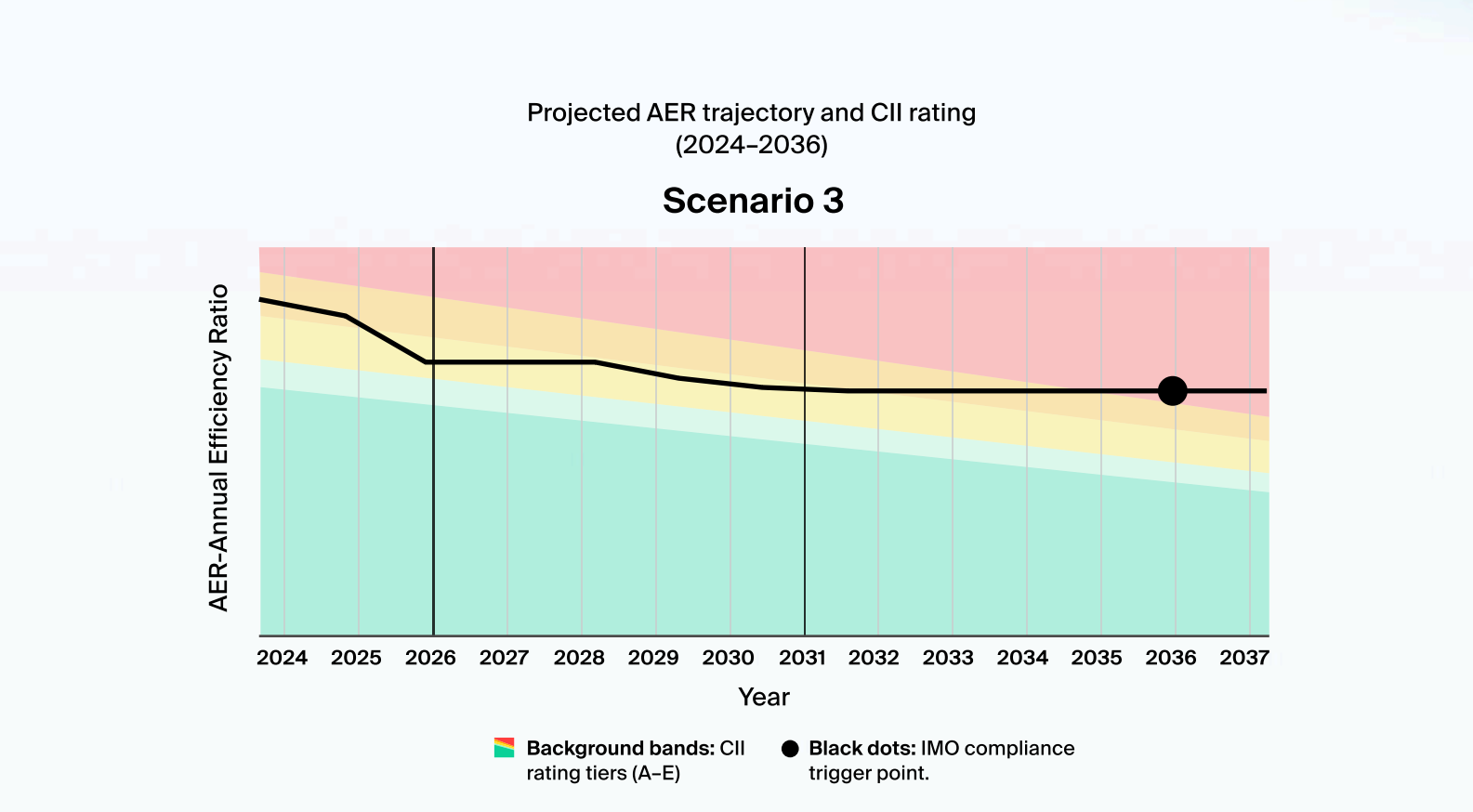
A phased, low-CAPEX scenario aligned improvements with the vessel’s lifecycle. Immediate operational measures were combined with targeted retrofits during the 2026 dry docking—such as energy-saving devices and ultrasonic antifouling—followed by incremental optimisation steps. This approach achieves approximately 16.5% fuel savings with minimal operational impact.
Selected strategy
The phased low-CAPEX configuration was selected as the optimal solution. It preserves cargo capacity, aligns with scheduled maintenance, and delivers a short ROI while maintaining CII compliance over the medium term.
Conclusion
This case demonstrates that compliance with tightening CII requirements can be achieved through a structured, scenario-based approach. By combining operational measures with targeted retrofits, shipowners can close efficiency gaps while maintaining commercial viability.
About GLO Marine
GLO Marine is an engineering-driven vessel upgrade partner and retrofit integration specialist, delivering decarbonisation and modernisation solutions for commercial shipping and offshore fleets.
The company supports clients across the full project lifecycle—from feasibility and techno-economic assessment to engineering, class approvals, and implementation. By combining engineering expertise with regulatory insight, GLO Marine delivers practical, compliant, and performance-driven retrofit strategies that extend asset life and improve energy efficiency.