The New Energy Economy: Security, Sovereignty, and Scale
Antalya, Türkiye | 9–11 November 2026 | Alongside COP31
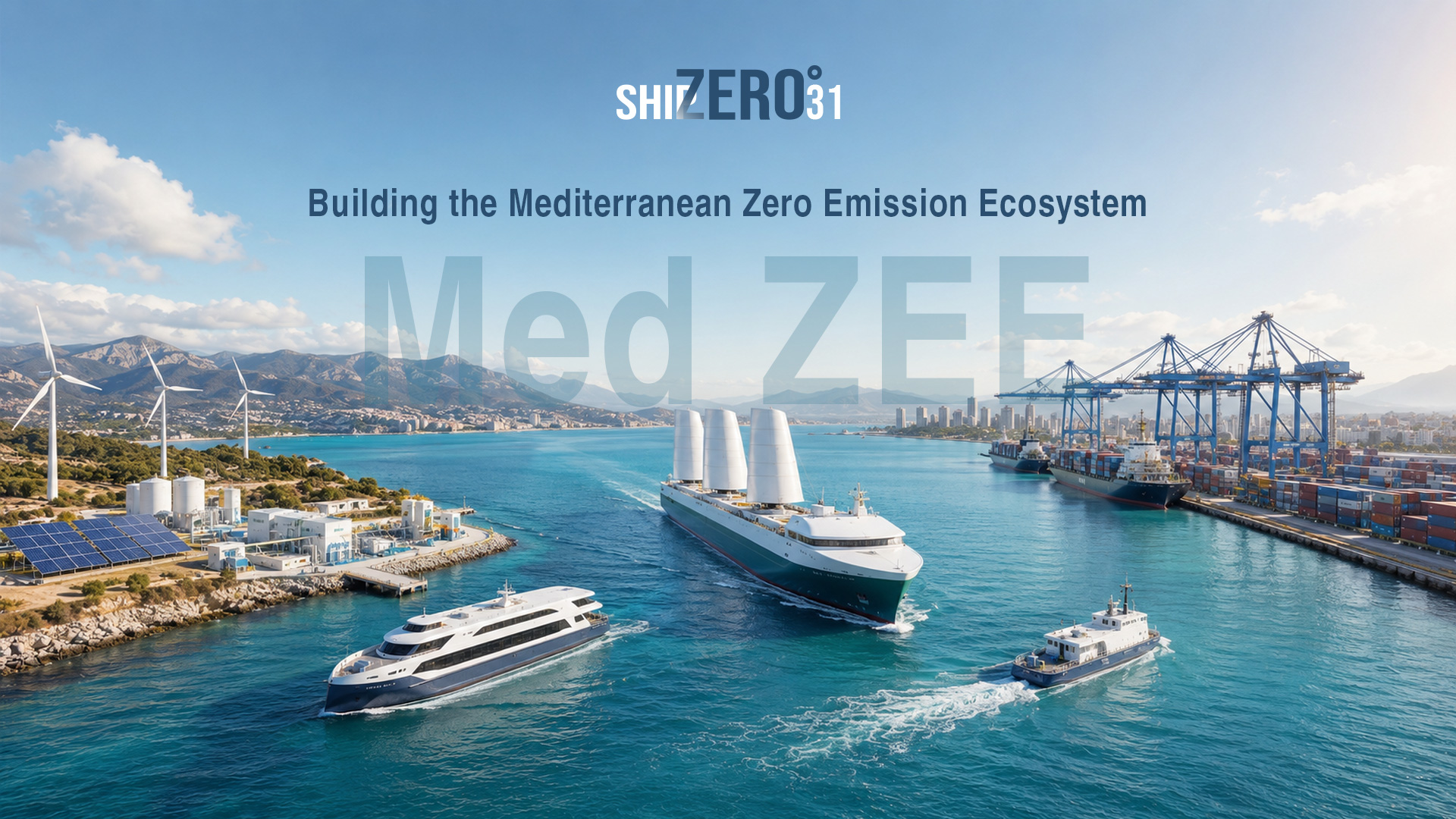
Building a zero emissions ecosystem in the Mediterranean
The transition to zero-emission shipping has evolved beyond a climate imperative. It is now the foundation of global energy security, supply chain resilience, and national sovereignty. The era of being held hostage by volatile fossil fuel supply chains and geographical chokepoints is ending.
As the cost of capital for legacy energy shifts, the winners of the new maritime economy will be the early movers who architect the infrastructure today. Pure green hydrogen, wind propulsion, and electrification are no longer distant aspirations; they are deployed, scalable, and commercially viable. The technology is ready. The mandate is clear. Now, we must build the ecosystem.
ShipZERO31 Mediterranean Zero Emission Ecosystem (Med ZEE) will be a three-day, in-person workshop focused specifically on the practical deployment of a zero-emission shipping ecosystem in the Mediterranean, bringing together the full value chain, from energy production through to vessel operations and port integration.
The programme will bring together the full value chain for integration, while also examining finance, intergovernmental relations, policy and regulation.
ShipZERO31 Mediterranean Zero Emission Ecosystem (Med ZEE)
The programme
ShipZERO31 will be delivered in two phases. Five online workshops will frame the challenges and lay the foundations. The insights gathered online will then form the basis of the three-day, in-person strategic consolidation in Antalya.
Phase 1
Five online workshops
In preparation for the in-person workshop, ZESTAs will hold five online webinar-style workshops to drill down into specific challenges and solutions and lay the foundations for the in-person workshop.
The purpose of the online workshops is to frame the challenges and identify the right questions. Each two-hour session will combine expert presentations with an expert roundtable brainstorm, followed by a summary, conclusions and next steps.
HyWindships: Zero-Emission Vessels
Combining wind, hydrogen and efficiencies. Held in collaboration with Pôle Mer, this workshop will focus on using wind propulsion to enable the use of pure hydrogen on longer routes within the Mediterranean.
Containerised Transferable Energy Storage Systems
In collaboration with AYK Energy and the Port of Rotterdam Condor project, this workshop will examine the feasibility of a network of containerised, swappable energy systems throughout the Mediterranean.
Mediterranean Zero Emission Ecosystem Finance
This workshop will bring together ethical lenders, sustainable investors and project financiers to examine innovative approaches to collaborative financing.
Zero-Emission Port Energy Infrastructure and Green Shipping Networks
Led by ZESTAs port expert Dr Beatriz Canamary, this workshop will examine which ports and routes are most viable for early implementation. Ports, cargo owners, energy providers and shipowners/operators will consider preselected criteria: willingness to engage, renewable-energy availability, traffic flow and route compatibility.
Intergovernmental Mediterranean Technical Cooperation Framework
This workshop will convene government actors for an absolute zero Mediterranean ecosystem. The objective is to secure multilateral consensus and technical cooperation among key Mediterranean governments in Europe, North Africa and the Levant, supporting the deployment of true zero-emission maritime trade routes and alignment with IMO Technical Cooperation capacity-building goals.
Online workshop format
- 00:00Introduction to the topic and challenge
- 00:10Expert presentations
- 00:55Ten-minute comfort break
- 01:05Expert roundtable brainstorm
- 01:40Summary
- 01:50Conclusions and next steps: what do we deliver to the ShipZERO31 in-person workshop in Antalya?
Phase 2
In-person strategic consolidation
The insights gathered from Phase 1 will form the foundation of a three-day, in-person workshop in Antalya. This event will transition the focus from individual technologies to a cohesive, region-wide system.
Through expert presentations, moderated panels and targeted breakout sessions, the agenda will progress logically through the ecosystem.
The workshop will begin at the source by looking at how much energy we can get from where and how we will get it to where it needs to be. It will then examine the most energy-efficient and cost-effective way to get this energy into ports and onto vessels, followed by the most efficient use of that energy on the many different vessel types and trades operating in the Mediterranean.
The programme will then pull back to consider the wider finance and policy frameworks, before bringing the learning together to identify the most viable routes, vessels and trades for a first implementation stage.
-
Current situation
Introduction to ShipZERO Med ZEE; ShipZERO programme background and rules of engagement; what is an absolute zero-emission ecosystem; why the Mediterranean; and a high-level overview of the current Mediterranean energy and shipping ecosystem.
- Countries and ports
- Energy sources
- Vessel types
- Routes and cargo and passenger flows
-
Framing the challenges and opportunities
High-level presentations of the outcomes from the five online workshops will provide the starting framework for the in-person work.
-
Parallel workstreams
A. Laying the foundations: Ports and Energy
Mediterranean zero-emission energy sourcing and logistics, including source, transport and infrastructure; port infrastructure and energy transfer; containerised transferable energy storage systems; hydrogen bunkering; and shore charging.
B. Efficient Vessel Design and Efficiency Technologies
Wind propulsion, including kites, suction sails, rigid wings, rotors and combinations; fuel cells and batteries; combined efficiencies and HyWindships; and hydrogen and electrical-system integration.
-
Combining Forces: Horses for Courses
This session will begin the matching exercise that will build the foundation of the Med ZEE blueprint, matching available technologies and energy sources with the diverse vessel types and trade routes operating in the Mediterranean.
- Which vessel types can be zero now using available technology and energy?
- Which routes are the most viable in the short, medium and long term?
- What is the long-term practicable plan for harder-to-abate routes?
-
Blue Economy Green Shipping Ecosystem Finance: The New Asset Class
Structuring the necessary investments for the Med ZEE through ocean finance, nature-based finance, capital for OPEX, blue bonds, venture capital, ethical lending, and blended and multisectoral finance.
-
Intergovernmental Mediterranean Technical Cooperation and Policy Frameworks
Policy tailwinds and challenges; governmental, regional and international regulation; bilateral versus multilateral agreements; and network-based policy agreements.
-
Route validation
Confirming the most viable corridors, vessels, trades, financing and intergovernmental commitments for the first implementation stage.
The deliverable
Med ZEE Green Shipping Networks Template
The outcome will be a roadmap for creating a Mediterranean Zero Emission Ecosystem, as well as a template for future Zero Emission Ecosystem development. The final session will confirm actions from committed stakeholders on implementation and movement to the next stage.