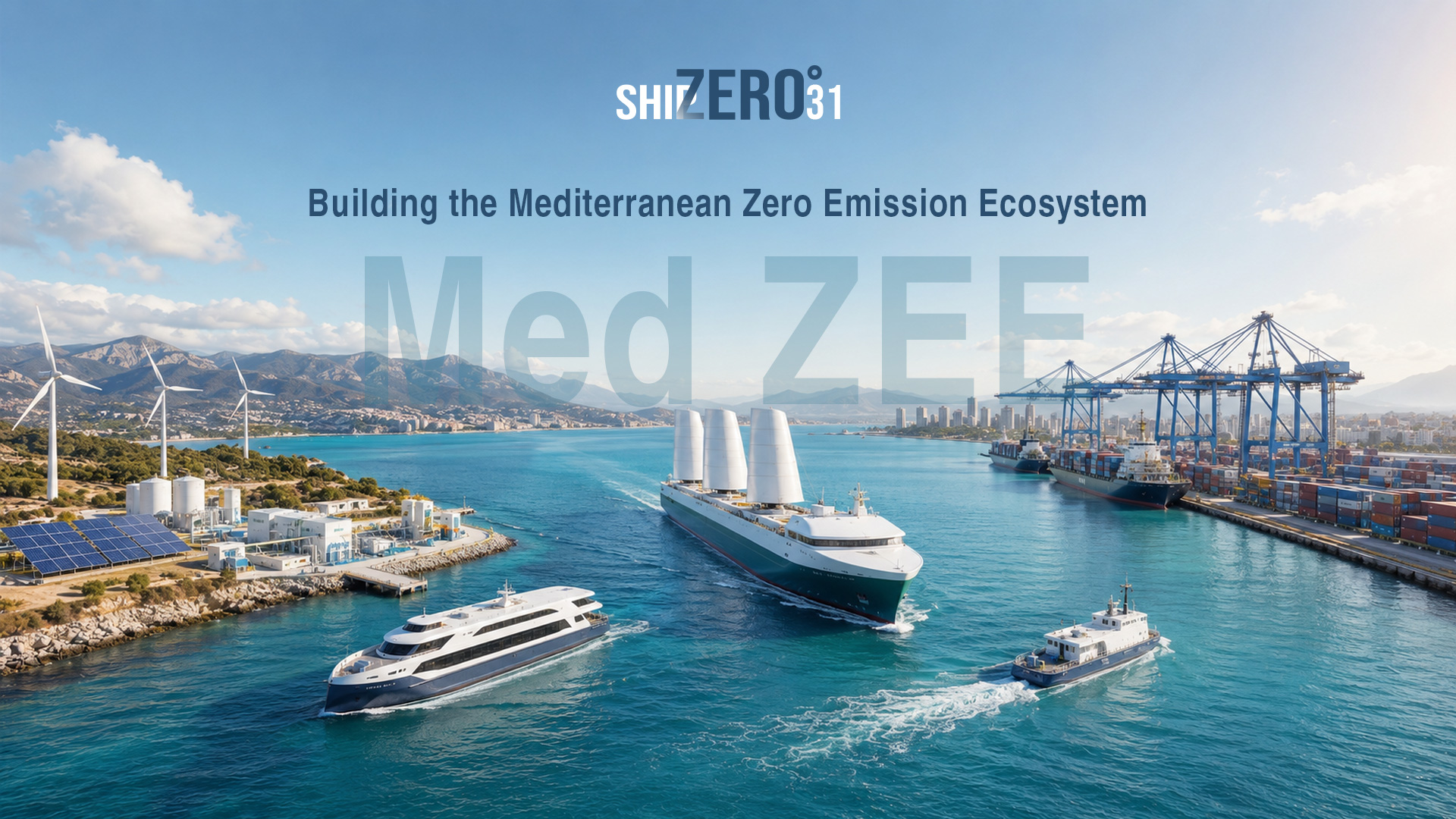
Across the globe, the vessels, energy, ports infrastructure, finance and policy needed for zero-emission shipping are developing in isolation. ShipZERO31 is a series of web-workshops that connect the full value chain; technology developers, shipowners, ports, energy providers, financiers and policymakers.
Together, we’ll work through each piece in turn: vessel technology, energy production, ports, routes, finance, and the intergovernmental policy and regulation that will deliver on IMO Net-Zero Framework.
ShipZERO31 Med-ZEE workshops
Financing the Mediterranean Zero Emission Ecosystem
The technologies are advancing. The projects are taking shape. How do we finance their deployment?
Following three workshops examining vessel technologies, energy systems and renewable hydrogen production, ShipZERO31 now turns to the financial arrangements needed to develop a functioning Mediterranean Zero Emission Ecosystem.
The challenge extends beyond financing individual vessels or hydrogen production facilities. Zero-emission shipping requires coordinated investment across energy production, storage, distribution, port infrastructure and vessel operations. Each component must have a viable business case, and each depends on the development of the others.
This fourth workshop brings together expertise in sustainable infrastructure finance, investment, regulation and maritime development to examine how these interdependent projects can become commercially viable and investable.
Register for Workshop 4Moderator and speakers
Select a portrait or name to open the speaker’s LinkedIn profile.
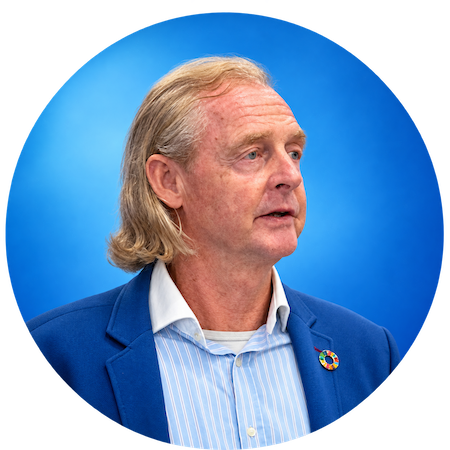
 Gyorgyi Gurban
Speaker
Head, Climate and Clean Air Implementation, Subdivision for Maritime Development, Technical Cooperation and Implementation Division, International Maritime Organization (IMO)
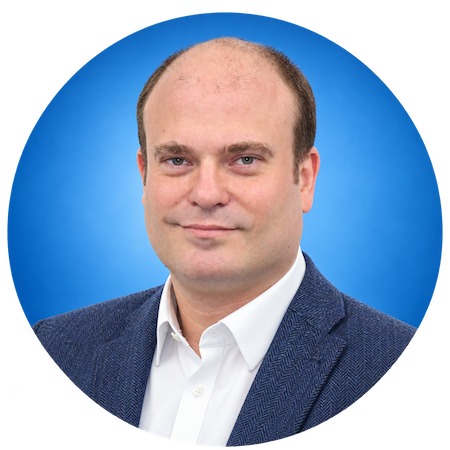 Victor Bonilla
Speaker
Principal, Sustainable Infrastructure, Climate Strategy and Delivery, European Bank for Reconstruction and Development (EBRD)
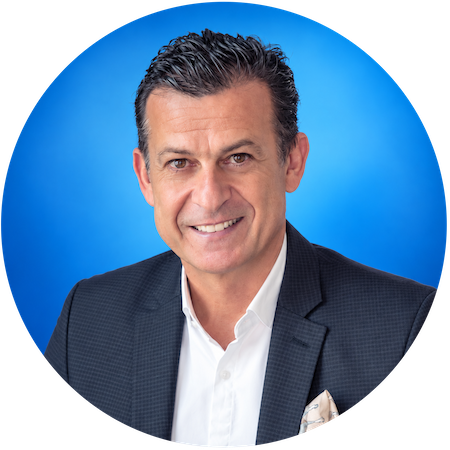
 Torsten Thiele
Speaker
Founder & Executive Director, Global Ocean Trust; Senior Advisor, Blue Finance, Ocean Risk and Resilience Action Alliance (ORRAA)
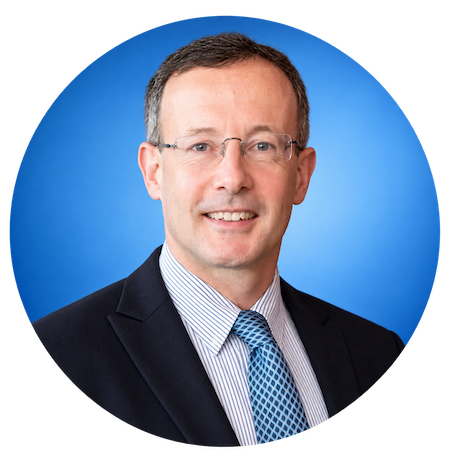
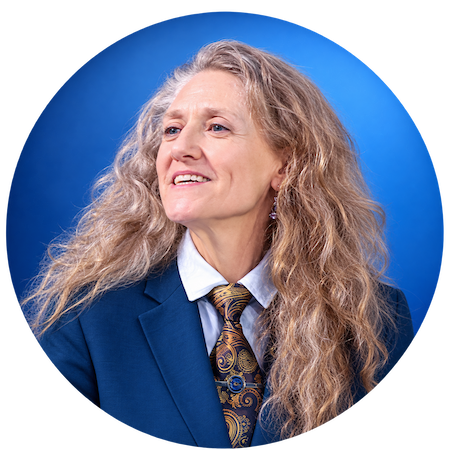 Madadh MacLaine
Speaker
Founder & Secretary-General, Zero Emissions Ship Technology Association (ZESTAs); Global Green Gaseous and Liquid Hydrogen Alliance (G3LHA)
 Suzanne Johnson
Speaker
Senior Advisor, Ocean Stewardship Coalition, United Nations Global Compact; Head of Sustainability Programme, Lloyd’s Register Foundation
The next challenge: making the ecosystem investable
The first three workshops have identified technologies, emerging projects and infrastructure requirements. This final discussion examines the financing conditions that connect them:
- Investment and risk: Who finances vessels, shared energy assets, production facilities and ports, and how should risks be distributed?
- Bankability: What revenue models, offtake commitments and guarantees can attract commercial investment?
- Scaling deployment: How can projects progress from demonstrations to commercial operation without indefinite reliance on grants?
- Public and private finance: How can development banks, concessional finance, private capital and public policy enable coordinated investment?
- Regulatory certainty: What frameworks and economic incentives are needed to make True Zero emissions commercially competitive?
Join us to examine practical financing arrangements for a connected, investable Mediterranean zero-emission shipping ecosystem.
Register to participatePrevious workshops: watch the recordings
Swappable Energy Storage Systems
Containerised batteries, compressed hydrogen and liquid hydrogen as a bridge to zero-emission operation ahead of permanent port infrastructure.
Swapping and shared energy assets
Operational battery-swapping models can reduce vessel downtime and separate energy infrastructure investment from vessel ownership. Scaling these approaches requires compatible standards, certification, shared infrastructure and sufficient utilisation.
Financing question: How can costs and risks be allocated between shipowners, energy suppliers, ports and infrastructure investors?
English captions are enabled by default where available. Use CC to turn captions on or off.
Sponsored by

HyWindships: Wind, Hydrogen and Efficiency Technologies
How vessel energy demand can be reduced through wind propulsion, efficiency technologies and integrated zero-emission energy systems.
Integrated vessel performance and investment
Wind propulsion, hydrogen fuel cells, batteries and efficiency measures can reduce energy demand. Financing remains difficult when integrated systems are perceived as introducing additional technical or investment risk.
Financing question: How can investment structures recognise fuel savings, operational benefits and integrated performance while lowering early-deployment risks?
English captions are enabled by default where available. Use CC to turn captions on or off.
Renewable Energy and Hydrogen Production
Where Mediterranean renewable energy can be produced, how it can be converted into hydrogen, and how that energy can reach maritime demand.
Supply infrastructure and committed demand
Hydrogen project viability depends on production, transport and storage infrastructure, and credible offtake. Aggregating demand from shipping, industry and other users could improve utilisation and project economics.
Financing question: How can renewable hydrogen production, storage and distribution be financed at scale with committed demand and acceptable construction risks?
English captions are enabled by default. French subtitles are also available: select Settings → Subtitles/CC → French.

Proudly sponsored by



Convened by ZESTAs and the Global Liquid Hydrogen Alliance (GLHA).

Partners