
Policy & Regulation

IMO Submissions

PPR 13 Submission – Polar Fuels (2025)
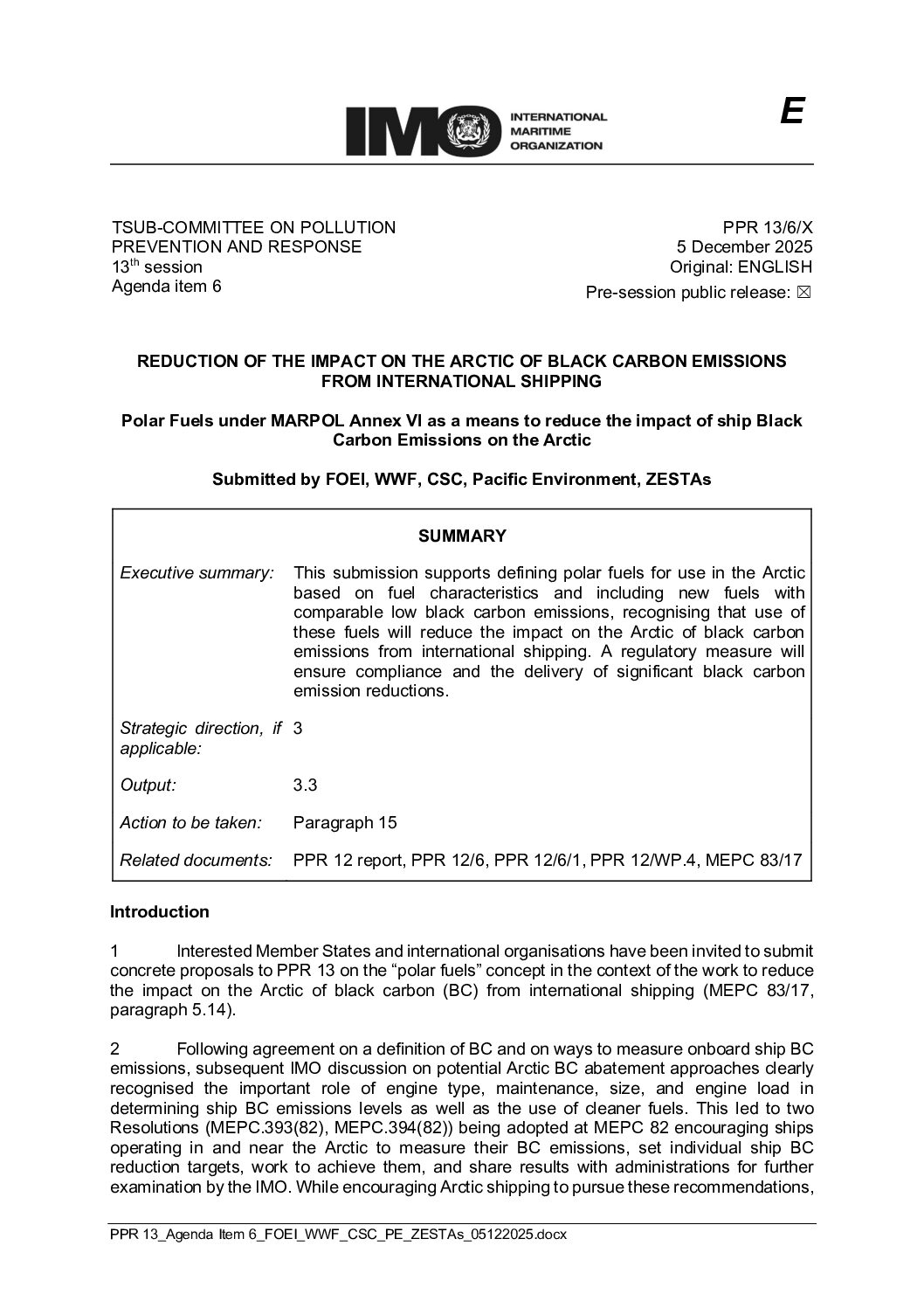
A joint proposal to PPR 13 outlining how defining “polar fuels” based on specific fuel characteristics can reduce Black Carbon emissions from ships operating in and near the Arctic. The submission argues for a regulatory measure to ensure consistent uptake of cleaner fuels and highlights how such a requirement would significantly cut Black Carbon emissions across the wider Arctic region.

MSC 110-INF.30 – Suggestion for the development of training measures for crews of hydrogen ships (ZESTAs)
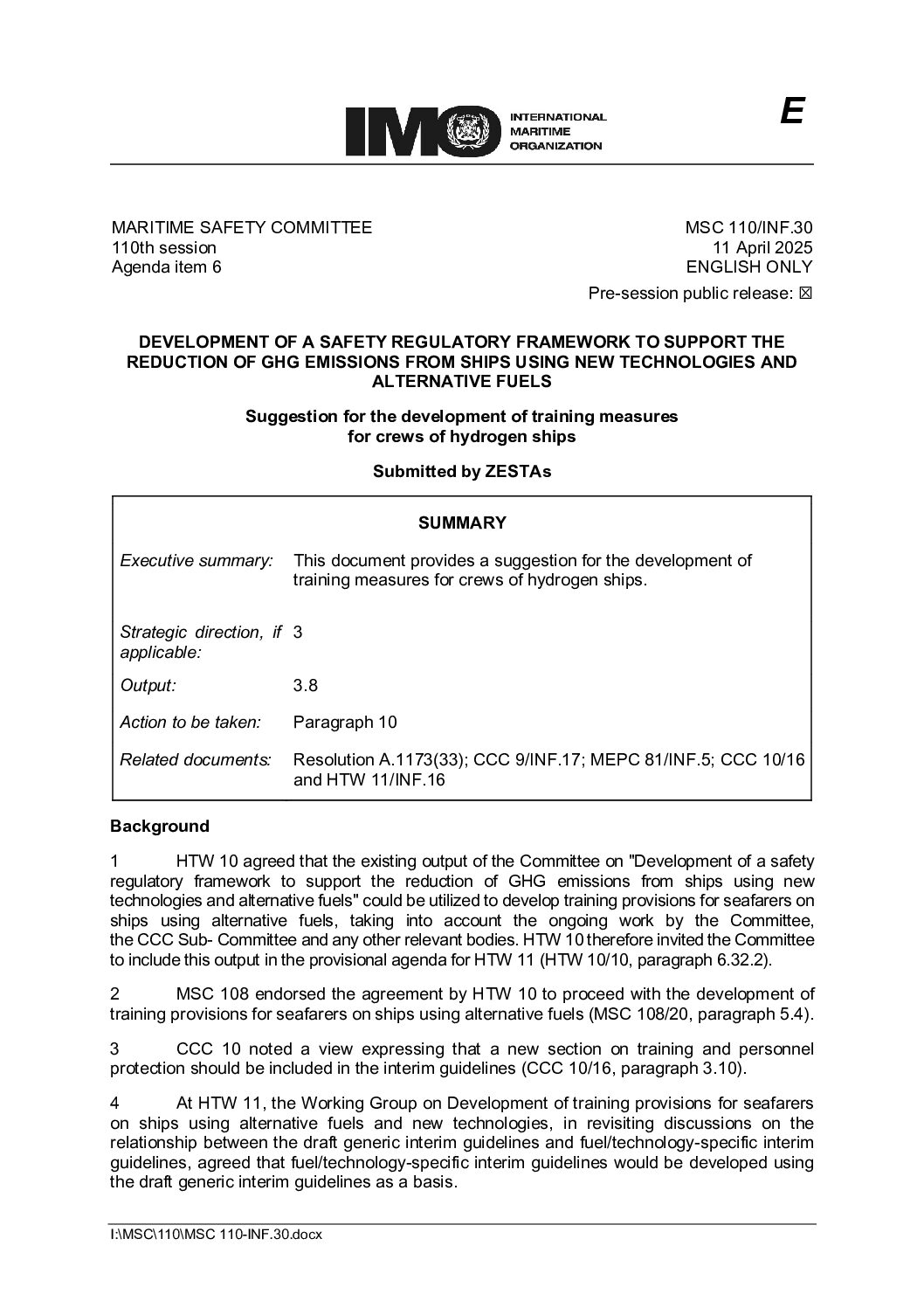
ZESTAs’ submission to MSC 110 presenting suggested hydrogen-specific training provisions for seafarers, mapped against STCW IGF competencies.

HTW 11-INF.16 – Information about current training measures for crews of hydrogen ships (UK, ITF, ZESTAs)
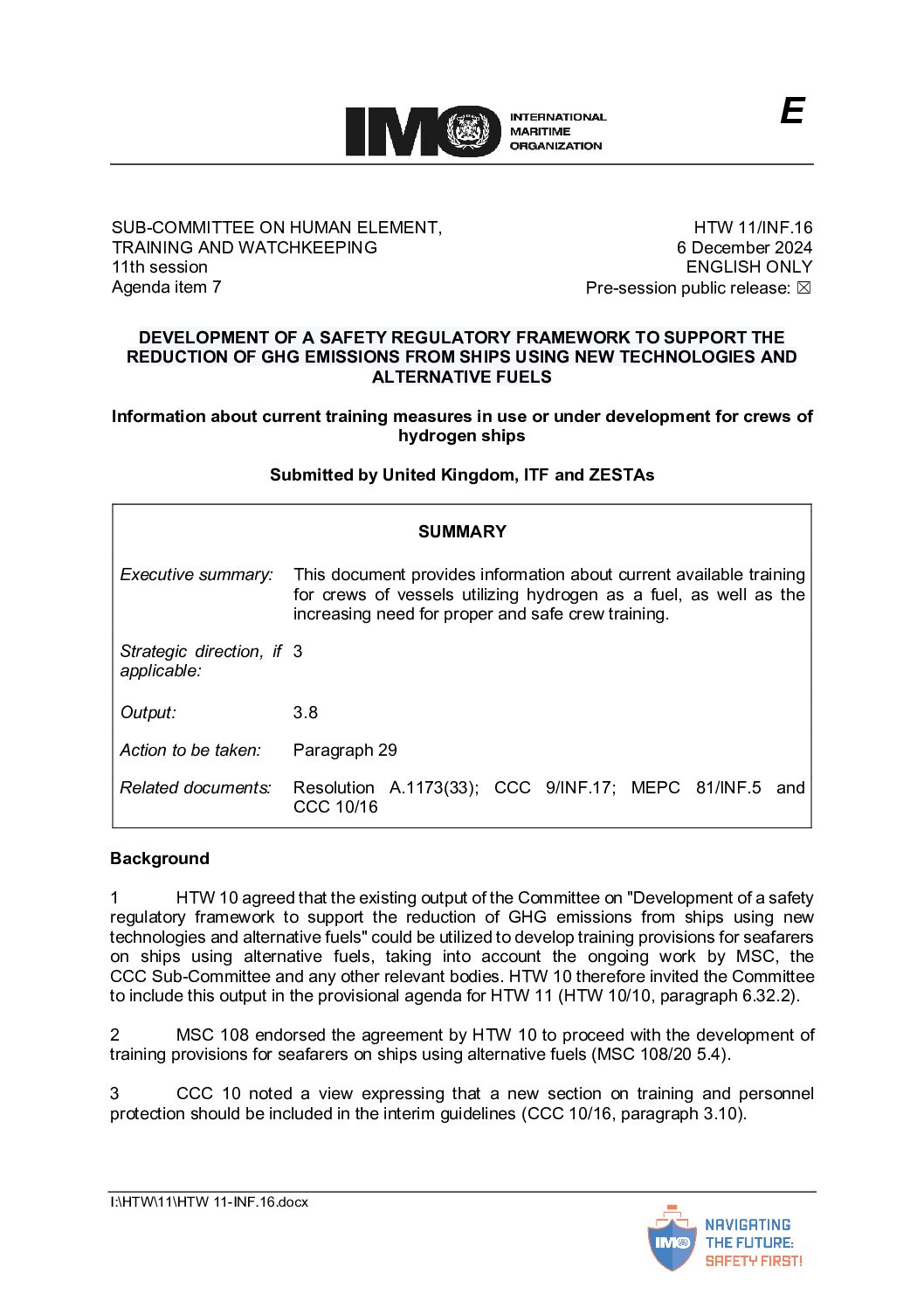
An information paper summarising current hydrogen crew-training courses, including UK MCA-recognised programmes, and outlining increasing global training needs.

MEPC 81/INF.5: Commercial Readiness of Absolute Zero Emission Technologies

ZESTAs has taken a significant step in transforming the shipping industry with it’s second detailed white paper submission, to the International Maritime Organisation (IMO) MEPC 81/INF.5: “Commercial Readiness of Absolute Zero Emission Technologies”.. This submission outlines the current state of zero emission shipping technologies and their commercial readiness, showcasing solutions for achieving absolute zero greenhouse gas emissions across the supply chain. This move underscores ZESTAs’ dedication to influencing sustainable practices and technological advancements in the maritime industry, highlighting its growing role as a trusted source of information and insight for industry decision-makers and bodies.

ISWG-GHG-15/INF.2: Commercial Readiness of Absolute Zero Emission Technologies

The white paper, contributed to by our members and partners and prepared by ZESTAs’ team of experts, focuses on the advancements and capabilities of shipping technology enabling absolute zero greenhouse gas emissions emissions across the full supply chain. It shows that solutions are technically and commercially ready now to greatly reduce shipping emissions. It was submitted to IMO committee ISWG-GHG 15, which took place from June 26th to 30th.

Pin It on Pinterest

Share This